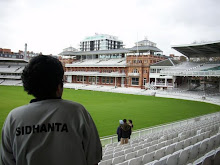
Ever since the world cup schedule was drawn, the 3110th one day international match was tagged as a marquee contest and the mouth watering ingredients of top forms, star players, venue shift and ticket controversy had cooked up for a humdinger but the probable top of the table clash did not present itself with any side effect clauses. However more than 12 hours after the high voltage dramatic finish that India and England transpired to produce at M. Chinnaswamy, Bangalore, emotionally drained minds, exhausted bodies, weak knees wanting for more and floating feelings gives a silhouette of the palpitation and tension that the participants went through courtesy the classic nail biter.
The hangover takes the thoughts back to the intense images of last evening and immediately the mind springs to action for a post mortem of field placements and permutation and combination of what would or would not have happened had an extra run been scored with the bat or a few extra runs saved on the field. On one side of the fan’s psyche, the feeling is flamboyant for being privileged to have witnessed 599 deliveries of an epical entertaining episode between two strong cup contenders but the other half, that of a parochial cricket lover is busy pacifying the soul for having got out of jail, after all with ordinary fielding and without any firepower to cause real time threat to the Englishmen, the bleed blue boys managed a tie from the jaws of defeat.
A few years back a score of 338 runs posted by the team batting first would have eliminated the anxieties of betting racquets, knowing exactly where to place their penny on but in 2011 on a flat sub continent track, with the evolutionised batting technology any score below 350 is just par. India was presented with an opportunity on a platter to set a total beyond reach but their inability to press the pedal and seal the advantage while being on the driver’s seat overshadowed the little master’s obsession for centuries; around which the batting revolved. Similarly when an international team was made to look like a club side while defending a comprehensive score, few questions cropped up immediately. With bowling resources as thin as setting Sun’s rays, this match removed the mask and exposed the naked reality of India’s bleak possibility of winning the cup that matters.
If MS Dhoni and boys have to do justice to all the hope that has been pinned on them then this was a much needed reality check to shake them up and the result communicates that there is a lot of ground to cover and editions to make. Though it was a good ploy to play three spinners yet the point could not be driven home on a ground which has produced India’s top two leg spinners. Piyush Chawala might be well backed by the team management but the sight of him coming to bowl with sweaty palms, nervous looking face and then delivering more than 51% of his quota of the deliveries on the wrong half of the pitch is not pleasant for a buoyant fan who has planned his calendar around 2nd April 2011.
With a mammoth total on the board, a much more attacking field was the need of the hour so that the bowlers would have got the license to go for the kill right from the outset, instead it was more of a defensive field and the runs kept leaking till the 40th over as Andrew Strauss through his classical innings along with Ian Bell sensed the crack in the wall and drove it open. A few more men in the ring would have changed the context of the game as was seen when a man at short mid wicket was placed for Yuvraj Singh’s left armers in the 41st over. Immediately the number of dot balls increased the pressure and the gap in the equation expanded forcing Strauss to opt for the batting power play. The batting power play once again proved to be a nemesis for the batting sides in both the innings. England’s crumbliness after the departure of Ian Bell and Andrew Strauss off successive deliveries was understandable considering the pressure that had been built in by the packed 40,000 crowd but what went wrong with India?
Sachin Tendulkar and Gautam Gambhir and then Yuvraj Singh and MS Dhoni set the ideal platform for the lower middle order batsmen to come and play a flurry of shots but that was not to be as against the run of play, the momentum was lost and in a space of 33 runs 7 wickets tumbled. This is one area India has to be careful in the remaining matches and cannot afford to slip up because this is where the team’s strength lies. However between all these glitches lies the minor issue of applying common sense and making it a mandate in the dressing room to bat out the 50 overs. Zaheer Khan’s thought process while facing the penultimate ball of the innings needs to be questioned. He not only got run out trying to force a second run when it was not on but also ran one short. He is no Harbhajan Singh and in situations like he was in, application of basic cricket brain should have taken precedence ahead of trying to go for the glory. There will be lifelong speculation of what would have happened had Munaf Patel got the strike and scored a boundary off the last delivery of the Indian innings but for now Ajmal Shahzad has become a household name across India and will always be an answer to various trivia questions that will be designed around that six, he hit off Munaf’s third ball in the 100th over of the match. The value of the point earned or lost from this contest will only be known depending on who finishes as group topper of the league stage and who their opponent is for the quarter final.
All in all, by the time the 5158th run of the 10th cricket world cup was scored and 4th tie of world cup cricket was secured, cricket had become richer and it augurs well for the competition. Special kudos have to be showered on Karnataka State Cricket Association for having fought their ways amidst controversies to facilitate a thrilling encounter and the energetic people of Bangalore deserve a round of applause whose sporty behavior has been rewarded with two top class world cup matches that are now a part of the cricketing folklore (read 1996 world cup Quarter Final match between arch rivals India and Pakistan).
On a personal note, I made up my absence at the stadium by teaming up with old mates in front of the television, with whom I have watched cricket matches for nearly 10 years now and the experience was tantalizing. Like a true adrenalin cricket junkie my mind is still fixated on yesterday and I have refrained myself from switching on the television today because then the high would lower and bubble would burst as no other cricket match for some time to come can present the extremities of the pendulum swinging from one side to another periodically. It will take some time for normal services to resume.
Link to the match - http://www.espncricinfo.com/icc_cricket_worldcup2011/engine/current/match/433568.html
Sidhanta Patnaik
28th February 2011, 5.06pm
Marthahalli, Bangalore
P.S – MS Dhoni is one of the shrewdest international cricket captains and a smart strategist. The technical points in this piece are mere observations from the other side of the white line and in no way intends to question MS Dhoni’s on field decisions. The writer is well aware that it is a different ball game altogether once you step inside the boundary.
Monday, February 28, 2011

Saturday, February 26, 2011
Paying cricket fan deserves better treatment
Right from queuing up overnight for a ticket a few days before a contest to walking a fair distance to get to the parking area after the completion of the game, amidst pollution that can be the root for any airborne disease, it is quite a torturous process for anyone who has ever been to a stadium in India to experience its biggest entertainment spectacle – a cricket match featuring the national team. In spite of this painful journey the average Indian middle class has never failed to pay and honour its commitment of filling up the arena every time the clowns are brought to the town in their colorful attire for the circus. The marketers have lapped up this unassuming role of the fans and in an attempt to leverage their benefits have turned predators and injected greed into the business cycle. What is unfortunate however is that though the controlling boards (international, national, state) measure the pulse of this triangular relationship and have always grinned at the richness that the Indian fans generate for them yet they have purposefully failed to understand the importance of human quotient or have knowingly stayed away from a question that has been asked time and time again ever since Board for Control of Cricket (BCCI) became one of the richest sporting body of the world. Despite making cricket cash rich why is the Indian fan always taken for granted? The answer is not far away.
First of all to open the counters for selling a meager 7,000 tickets for the high profile India vs. England encounter at M. Chinnaswamy stadium on 27th February 2011 or for that case 3,000 tickets for the world cup finals in Mumbai is a systematic failure of the organizers to assess the demand for the world cup’s return to its financial haven after 15 years. One has to take into account the last minute shift of the Bangalore match from Kolkata but then the world noticed how the online ticketing agency’s website was made a mockery of when ten million people tried to get a hand on one of the thousand tickets available online for the final match. These incidents bring embarrassment to the world cup which is heavily dependent on the Indian mass to be a commercial success. It goes without mentioning that like any other business project there are sponsor deliverables and on top of that in the Indian context there are bureaucratic issues of massaging the egos of association members and local government authorities through free match passes but for that do the fans have to compromise? Like any other professional venture why cannot the fans be treated as kings in the cricket economics of the subcontinent, is it that difficult?
The episodes that have transpired over the last week clearly indicates that the organizers at three levels (ICC, BCCI, state associations) have not worked in tandem for a foolproof plan with respect to the ticket distribution arrangement and it was a matter of time before the media brought it out to the open. The audacity of Mumbai’s mayor to demand for a certain number of free passes for the finals and the reasoning behind it or the detention of two Karnataka State Cricket Association officials for their alleged role in selling match tickets at an inflated price in the black market gives a fair idea of how tickets are freely available in the air but still far from reach to the common man.
When news such as these make headlines it brings bad name to the state association for which it becomes their prerogative to set the house in order. It is time for boards to look beyond voting banks, visualize the big picture and operate like a corporate house does. As an on ground partner for ICC events their priority should be on fan satisfaction and issuing free passes to members should be restricted to minimum number and done on a pro-rata basis. At the same time it should be ICC’s responsibility to set the guidelines and take charge of the situation instead of being allowed to be kicked like a sponge ball between state and national political wires. Similarly ICC should also rethink on its terms and conditions and negotiate on free pass deliverables to its sponsors. Tapering with the quota system is bound to rage the privileged class but the big question of who is the heart beat of the game; the members or the mass needs to be asked. From an honest answer, the change will stem down the system and the ripple effect will finally make the cricket business bigger than the personalities running it and with it the magnitude of respect will grow.
The corporate representatives in suits inside glass boxes have always come to the ground to cut a deal or oblige a partner and that does not do the game any good from a socio-cultural aspect. Therefore ICC’s single motto should be to ensure that more and more paying public walk through the turnstile. For the junta (mass) who are the real lovers of the game the result of the match has always been incidental, instead the joy of seeing a player from a distance, clicking a photo with the ground as the backdrop or being captured on the giant screen is what creates an experience of lifetime for them and it should not be that difficult for a sports body to understand the long term profits of such a mind set. The fans not only add benevolent colour to the buzz and excitement around the stadium but a full house is the single most effective tool to help a broadcaster earn credible TRP rating across the globe and if not for anything else but for this role of theirs, fans deserve more respect and better treatment.
At another level the brutal behavior on the fans by the local police every time they line up over a night with a hope of ‘winning a ticket’ against the race is something that needs to stop. The recent media images of police lathicharging the fans outside M. Chinnaswamy stadium; Bangalore is a shame to a land where cricket is the biggest connecting factor. For any Indian who has been a part of that rooster camp at some point of their life and has felt the stick on the backside of the body will relate to the pinch of ego, after all only a criminal deserves such action. It does not happen in South Africa or England or Australia then why do the Indian fans go through the ordeal when they are the one’s contributing maximum to the kitty?
It boils down to the administrators to show the right intent, put their heads together, study the best practices of iconic sporting properties and work out a logistical plan that is peaceful and free from the element of nightmare. Once the quantity of tickets to be sold is reached after accommodating the free passes, the number and the process of ticket sales should be made public. Each buyer should be entitled for a solitary ticket hence negating any threat of black market. The gates to the ticket camp can open one night before the counters start operating and each fan on walking into the camp will be given a colour differentiated token depending on his/her choice of seat denomination. Just like in Wimbledon, fans can come to the camp with their canopies and other basic amenities and have a good time around it. Once the number of tokens issued matches with the tickets available, the entry to the camp should be closed. The fans have to queue as per the token number. As soon as the sun rises, the queues can start moving in the direction of the ticket counter, aided by volunteers and that would avoid any chaos and help in making the fan’s journey an enjoyable one. Just imagine the goodwill and coverage the association who implements such a plan will earn by the time the last ticket is sold at the counter.
The cricket loving people of India have always been treated like cattle for no fault of theirs but like the true nature of this democracy they have let it go and moved on however the new generation which has access to the world at their finger tips has a different mentality. They demand respect, comfort, luxury and value for what they pay. If the approach of the authorities towards the queuing public does not change in the near future then the younger generation will eventually be driven away from the stands and the repercussions of such a move will ultimately deplete the cricketing vibrancy of the country right from the gullies (lanes) to the living rooms to the international level and tomorrow our beloved sport will be dead and buried. Typing such a line makes the monitor look like a scary battle field and to avoid it in real, the administrators have to wake up now to the new demands.
Sidhanta Patnaik
26th February 2011, 12.19am
Marthahalli, Bangalore
First of all to open the counters for selling a meager 7,000 tickets for the high profile India vs. England encounter at M. Chinnaswamy stadium on 27th February 2011 or for that case 3,000 tickets for the world cup finals in Mumbai is a systematic failure of the organizers to assess the demand for the world cup’s return to its financial haven after 15 years. One has to take into account the last minute shift of the Bangalore match from Kolkata but then the world noticed how the online ticketing agency’s website was made a mockery of when ten million people tried to get a hand on one of the thousand tickets available online for the final match. These incidents bring embarrassment to the world cup which is heavily dependent on the Indian mass to be a commercial success. It goes without mentioning that like any other business project there are sponsor deliverables and on top of that in the Indian context there are bureaucratic issues of massaging the egos of association members and local government authorities through free match passes but for that do the fans have to compromise? Like any other professional venture why cannot the fans be treated as kings in the cricket economics of the subcontinent, is it that difficult?
The episodes that have transpired over the last week clearly indicates that the organizers at three levels (ICC, BCCI, state associations) have not worked in tandem for a foolproof plan with respect to the ticket distribution arrangement and it was a matter of time before the media brought it out to the open. The audacity of Mumbai’s mayor to demand for a certain number of free passes for the finals and the reasoning behind it or the detention of two Karnataka State Cricket Association officials for their alleged role in selling match tickets at an inflated price in the black market gives a fair idea of how tickets are freely available in the air but still far from reach to the common man.
When news such as these make headlines it brings bad name to the state association for which it becomes their prerogative to set the house in order. It is time for boards to look beyond voting banks, visualize the big picture and operate like a corporate house does. As an on ground partner for ICC events their priority should be on fan satisfaction and issuing free passes to members should be restricted to minimum number and done on a pro-rata basis. At the same time it should be ICC’s responsibility to set the guidelines and take charge of the situation instead of being allowed to be kicked like a sponge ball between state and national political wires. Similarly ICC should also rethink on its terms and conditions and negotiate on free pass deliverables to its sponsors. Tapering with the quota system is bound to rage the privileged class but the big question of who is the heart beat of the game; the members or the mass needs to be asked. From an honest answer, the change will stem down the system and the ripple effect will finally make the cricket business bigger than the personalities running it and with it the magnitude of respect will grow.
The corporate representatives in suits inside glass boxes have always come to the ground to cut a deal or oblige a partner and that does not do the game any good from a socio-cultural aspect. Therefore ICC’s single motto should be to ensure that more and more paying public walk through the turnstile. For the junta (mass) who are the real lovers of the game the result of the match has always been incidental, instead the joy of seeing a player from a distance, clicking a photo with the ground as the backdrop or being captured on the giant screen is what creates an experience of lifetime for them and it should not be that difficult for a sports body to understand the long term profits of such a mind set. The fans not only add benevolent colour to the buzz and excitement around the stadium but a full house is the single most effective tool to help a broadcaster earn credible TRP rating across the globe and if not for anything else but for this role of theirs, fans deserve more respect and better treatment.
At another level the brutal behavior on the fans by the local police every time they line up over a night with a hope of ‘winning a ticket’ against the race is something that needs to stop. The recent media images of police lathicharging the fans outside M. Chinnaswamy stadium; Bangalore is a shame to a land where cricket is the biggest connecting factor. For any Indian who has been a part of that rooster camp at some point of their life and has felt the stick on the backside of the body will relate to the pinch of ego, after all only a criminal deserves such action. It does not happen in South Africa or England or Australia then why do the Indian fans go through the ordeal when they are the one’s contributing maximum to the kitty?
It boils down to the administrators to show the right intent, put their heads together, study the best practices of iconic sporting properties and work out a logistical plan that is peaceful and free from the element of nightmare. Once the quantity of tickets to be sold is reached after accommodating the free passes, the number and the process of ticket sales should be made public. Each buyer should be entitled for a solitary ticket hence negating any threat of black market. The gates to the ticket camp can open one night before the counters start operating and each fan on walking into the camp will be given a colour differentiated token depending on his/her choice of seat denomination. Just like in Wimbledon, fans can come to the camp with their canopies and other basic amenities and have a good time around it. Once the number of tokens issued matches with the tickets available, the entry to the camp should be closed. The fans have to queue as per the token number. As soon as the sun rises, the queues can start moving in the direction of the ticket counter, aided by volunteers and that would avoid any chaos and help in making the fan’s journey an enjoyable one. Just imagine the goodwill and coverage the association who implements such a plan will earn by the time the last ticket is sold at the counter.
The cricket loving people of India have always been treated like cattle for no fault of theirs but like the true nature of this democracy they have let it go and moved on however the new generation which has access to the world at their finger tips has a different mentality. They demand respect, comfort, luxury and value for what they pay. If the approach of the authorities towards the queuing public does not change in the near future then the younger generation will eventually be driven away from the stands and the repercussions of such a move will ultimately deplete the cricketing vibrancy of the country right from the gullies (lanes) to the living rooms to the international level and tomorrow our beloved sport will be dead and buried. Typing such a line makes the monitor look like a scary battle field and to avoid it in real, the administrators have to wake up now to the new demands.
Sidhanta Patnaik
26th February 2011, 12.19am
Marthahalli, Bangalore
Thursday, February 24, 2011
Bravo, Tahir & a cricket match
All the cricket statistics for the next seven weeks might be emanating from the moment the clock struck 2.30pm as per Indian standard time on 19th February 2011 when Virender Sehwag characteristically hit the first ball of the 10th cricket world cup for a boundary to the extra cover region, but it is only after 2698 runs, 83 wickets and 496.5 overs and 6 one sided encounters were produced that the real moment arrived. If the first six days of the competition were meant for the fans to get into the zone of reviving their viewing habits then the next four days starting today can be categorically termed as the base on which the popularity of the world cup hinges on. If the Trans-Tasman rivalry of Australia and New Zealand or the keenness of a challenge between Sri Lanka and Pakistan or a marquee contest between India and England fails to arouse the interest level of a fan, then nothing probably will but to reach there one had to first witness the teaser that West Indies’ opening clash against South Africa offered to start an early weekend for cricket lovers.
On paper and as per the ICC ranking the result of the 7th match of the cup seemed to be a no brainer and that is how the match lived up to with the Proteas registering a comprehensive 7 wicket win hence achieving their first win over the Caribbean team in an ICC event. It was a true reflection of the downward slide that West Indies cricket has been through for more than a decade now.
West Indies cricket now is the benchmark for institutional failure in the sporting world but today for a span of 23 overs it looked like the Sun was about to rise once again over the Calypso island. Whoever witnessed the 111 runs 2nd wicket partnership between Devon Smith and Darren Bravo will not only vouch for the fluency that was on display but will also assure you that there were two talents on the park who are potentially ready to take their country’s cricket into the new horizon.
The 22 year old Darren Bravo’s 82 ball innings had class written all over it and that needs a special mention. The calmness on his face walking in after the dismissal of Chris Gayle in the first over is something that has been lacking in the West Indies line up for long. His temperament is what looks like to be his biggest asset and it was visible in his ability to rotate strike and simultaneously play fearless shots all across the wickets and keep the score board ticking. His drives off the square of the wicket reminisced comparison with the legend Brian Lara and for someone playing in his 14th One day international it is a true moment of reckoning. His perfect back lift and level headedness while playing shots marks him as a talent for the future. Just when everyone glued into their television, being refreshed by the original Calypso style batting was wishing how the party would continue Bravo misjudged a Botha delivery to be dismissed leg before wicket for an entertaining 73 and it was not long before the bubble burst and West Indies were left to defend a meager total of 222.
On the other side, there was a 31 years old man who having made his first class debut in 1997 and played in 261 matches at a level below international level for 19 teams was still unsure of his future till the last calendar year. With the arrival of the new year he not only became a legal South African citizen but was also gifted with a life that he had dreamt for ever since he spun a cricket ball from middle stump to off stump. Having travelled between Pakistan, England and South Africa to realize his ultimate dream of playing international cricket, Lahore born Imran Tahir is an epitome of journeyman cricketer. Mixing personal life with profession might not be a good idea but it is his marriage with a South African lady that helped him earn the country’s citizenship and the fact that he got a call up to the national team as soon as his legal formalities were completed gives a clear picture of the credibility he had built over 13 years and 547 first class wickets is a testimony of his skills and demand.
In a team that banks upon seamers to do the job more often than not there can be no assurance to the international career graph for this leg spinner but by taking four wickets on debut and displaying the spirit of an attacker he has finally done justice to that solitary opportunity that he had been looking for a lifetime now. Tomorrow Imran Tahir may or may not be a legend but 24th February 2011 will be a day for innumerous journeyman cricketers to draw inspiration from and continue their perusal towards earning an international cap. In a matter of few weeks Imran has become synonym of hope and motivation and that is itself a worthwhile achievement to earn someone a name for life.
May this world cup continue to produce many more such talents.
Darren Bravo’s profile - http://www.facebook.com/l.php?u=http%3A%2F%2Fwww.espncricinfo.com%2Ficc_cricket_worldcup2011%2Fcontent%2Fplayer%2F277472.html&h=25ca0
Imran Tahir’s profile -
http://www.espncricinfo.com/icc_cricket_worldcup2011/content/player/40618.html
Sidhanta Patnaik
24th February 2011, 11.19pm
Marthahalli, Bangalore
P.S – Today is exactly a year since Sachin Tendulkar scored 200* in the Gwalior ODI against South Africa and it also marks my one year of cricket writing.
On paper and as per the ICC ranking the result of the 7th match of the cup seemed to be a no brainer and that is how the match lived up to with the Proteas registering a comprehensive 7 wicket win hence achieving their first win over the Caribbean team in an ICC event. It was a true reflection of the downward slide that West Indies cricket has been through for more than a decade now.
West Indies cricket now is the benchmark for institutional failure in the sporting world but today for a span of 23 overs it looked like the Sun was about to rise once again over the Calypso island. Whoever witnessed the 111 runs 2nd wicket partnership between Devon Smith and Darren Bravo will not only vouch for the fluency that was on display but will also assure you that there were two talents on the park who are potentially ready to take their country’s cricket into the new horizon.
The 22 year old Darren Bravo’s 82 ball innings had class written all over it and that needs a special mention. The calmness on his face walking in after the dismissal of Chris Gayle in the first over is something that has been lacking in the West Indies line up for long. His temperament is what looks like to be his biggest asset and it was visible in his ability to rotate strike and simultaneously play fearless shots all across the wickets and keep the score board ticking. His drives off the square of the wicket reminisced comparison with the legend Brian Lara and for someone playing in his 14th One day international it is a true moment of reckoning. His perfect back lift and level headedness while playing shots marks him as a talent for the future. Just when everyone glued into their television, being refreshed by the original Calypso style batting was wishing how the party would continue Bravo misjudged a Botha delivery to be dismissed leg before wicket for an entertaining 73 and it was not long before the bubble burst and West Indies were left to defend a meager total of 222.
On the other side, there was a 31 years old man who having made his first class debut in 1997 and played in 261 matches at a level below international level for 19 teams was still unsure of his future till the last calendar year. With the arrival of the new year he not only became a legal South African citizen but was also gifted with a life that he had dreamt for ever since he spun a cricket ball from middle stump to off stump. Having travelled between Pakistan, England and South Africa to realize his ultimate dream of playing international cricket, Lahore born Imran Tahir is an epitome of journeyman cricketer. Mixing personal life with profession might not be a good idea but it is his marriage with a South African lady that helped him earn the country’s citizenship and the fact that he got a call up to the national team as soon as his legal formalities were completed gives a clear picture of the credibility he had built over 13 years and 547 first class wickets is a testimony of his skills and demand.
In a team that banks upon seamers to do the job more often than not there can be no assurance to the international career graph for this leg spinner but by taking four wickets on debut and displaying the spirit of an attacker he has finally done justice to that solitary opportunity that he had been looking for a lifetime now. Tomorrow Imran Tahir may or may not be a legend but 24th February 2011 will be a day for innumerous journeyman cricketers to draw inspiration from and continue their perusal towards earning an international cap. In a matter of few weeks Imran has become synonym of hope and motivation and that is itself a worthwhile achievement to earn someone a name for life.
May this world cup continue to produce many more such talents.
Darren Bravo’s profile - http://www.facebook.com/l.php?u=http%3A%2F%2Fwww.espncricinfo.com%2Ficc_cricket_worldcup2011%2Fcontent%2Fplayer%2F277472.html&h=25ca0
Imran Tahir’s profile -
http://www.espncricinfo.com/icc_cricket_worldcup2011/content/player/40618.html
Sidhanta Patnaik
24th February 2011, 11.19pm
Marthahalli, Bangalore
P.S – Today is exactly a year since Sachin Tendulkar scored 200* in the Gwalior ODI against South Africa and it also marks my one year of cricket writing.
Monday, February 21, 2011
Sourav Ganguly – Refreshing the face of Indian Commentary
For a country obsessed with its cricketers and contributing a lion’s share in enhancing the game’s richness, it is surprising that not many Indian cricketers have managed to ride on the wave after their on field sell by date. Except for Sunil Gavaskar and Ravi Shastri hardly has any Indian cricketer done justice to their ability of narrating and analyzing the game from the other side of the boundary line. Among the players who hung their boot after 1995 it is only Sanjay Manjrekar who comes close to comparison to the two microphone stalwarts. Barring a few who have been promising with still a lot to prove, others have either failed to express their thoughts appropriately or have been criticized for their associations with media houses that use cricket as a tool to enhance the TRP ratings of their ‘soap operas’.
Australia’s Channel 9 and England Sky Sports’ have been the favored employment destination for their cricketers who have wished to associate themselves with the game after retiring without being directly involved but the Indian scenario is quite contrasting. Not only did Board for Control of Cricket in India (BCCI) have no constant broadcaster for its home matches for long till Neo Sports’ emergence, but the communication skills which is the oxygen for an ex cricketer have always raised questions about their credibility beyond playing the game, probably the two key reasons why popular names have slipped into oblivion until handed over a honorary post by the board.
The taken for granted Indian audience’s patience was slowly hitting the roof top and the reviews of the broadcasters was visible on social networking sites where fans have openly shared their dismay ever since the medium has been made available to them, over the quality and content of the voice that brought the game into the living rooms. Not only had the Indian Premier League (IPL) made the commentators worthy a sales manager of a fast moving consumer good (FMCG) company but for an intelligent cricket watcher who keeps a tab of the telecast in Australia, South Africa and England, India formed the bottom end of the expected standards axis. The monotony had to be broken for better ratings and financial interest, if not for anything else and if anyone has heard to Sourav Ganguly in the two world cup match analysis shows that he has featured in so far has to congratulate ESPN Star for their master stroke.
The present generation hardly remembers watching Ravi Shastri or Sunil Gavaskar bat, but Sourav Ganguly remains fresh in their memories. Right from his burst into the international circuit with his Lord’s special in 1996 till his retirement in 2008 hardly has any other cricket divided opinions, the way he has. As a captain he was pivotal in setting the foundation for India’s resurgence as a top cricket team and allowed his hand picked boys to redefine the meaning of aggression and body language. The approach not only stirred the emotion of the entire nation but also invited for handful of controversies and he soon became a synonym for India’s attitudinal shift from gentlemen to ‘give back what you take’ boys, especially after his Lord’s balcony antics on 13th July 2002.
A slight observation confirms that nothing much has changed in his role as an analyst at ESPN Star’s studio. He may not be artistic but he is blunt, straightforward and is willing to call spade, a spade. His technical view points on game situations not only leave you wondering the reasoning skills he possesses but also leaves you wanting for more. Having played his last first class as recently as December 2010 and with 424 international match experience he brings in a sense of fresh air into an atmosphere that had become stagnant for quite some time now. His insights from dressing room perspective; trusted bait for listeners since the evolution of sports commentary, have not only kept the audience on their toes but also have given the fans an entry into the thought process of the cricketers featuring in this world cup.
The passion in his presentation is visible and if his progress is at the rate what one is seeing then it won’t be late before he earns another set of original fan base for his new profession. He has got an entry into a much bigger gamut which would have been far from possible had he been picked up by any of the franchisee for the fourth edition of IPL and knowing his penchant for the big stage, this is just the beginning of his second calling. Tomorrow if the world witnesses Sachin Tendulkar or Rahul Dravid in the commentator avatar then Dada deserves to be credited for opening yet another flood gate.
May the breed grow and continue to spice up cricket discussions across living rooms.
Sidhanta Patnaik
21st February 2011
Marthahalli, Bangalore
P.S: As I am about to publish this piece Harsha Bhogle, Dermot Reeve and Sunil Gavaskar wished him on his wedding anniversary
Australia’s Channel 9 and England Sky Sports’ have been the favored employment destination for their cricketers who have wished to associate themselves with the game after retiring without being directly involved but the Indian scenario is quite contrasting. Not only did Board for Control of Cricket in India (BCCI) have no constant broadcaster for its home matches for long till Neo Sports’ emergence, but the communication skills which is the oxygen for an ex cricketer have always raised questions about their credibility beyond playing the game, probably the two key reasons why popular names have slipped into oblivion until handed over a honorary post by the board.
The taken for granted Indian audience’s patience was slowly hitting the roof top and the reviews of the broadcasters was visible on social networking sites where fans have openly shared their dismay ever since the medium has been made available to them, over the quality and content of the voice that brought the game into the living rooms. Not only had the Indian Premier League (IPL) made the commentators worthy a sales manager of a fast moving consumer good (FMCG) company but for an intelligent cricket watcher who keeps a tab of the telecast in Australia, South Africa and England, India formed the bottom end of the expected standards axis. The monotony had to be broken for better ratings and financial interest, if not for anything else and if anyone has heard to Sourav Ganguly in the two world cup match analysis shows that he has featured in so far has to congratulate ESPN Star for their master stroke.
The present generation hardly remembers watching Ravi Shastri or Sunil Gavaskar bat, but Sourav Ganguly remains fresh in their memories. Right from his burst into the international circuit with his Lord’s special in 1996 till his retirement in 2008 hardly has any other cricket divided opinions, the way he has. As a captain he was pivotal in setting the foundation for India’s resurgence as a top cricket team and allowed his hand picked boys to redefine the meaning of aggression and body language. The approach not only stirred the emotion of the entire nation but also invited for handful of controversies and he soon became a synonym for India’s attitudinal shift from gentlemen to ‘give back what you take’ boys, especially after his Lord’s balcony antics on 13th July 2002.
A slight observation confirms that nothing much has changed in his role as an analyst at ESPN Star’s studio. He may not be artistic but he is blunt, straightforward and is willing to call spade, a spade. His technical view points on game situations not only leave you wondering the reasoning skills he possesses but also leaves you wanting for more. Having played his last first class as recently as December 2010 and with 424 international match experience he brings in a sense of fresh air into an atmosphere that had become stagnant for quite some time now. His insights from dressing room perspective; trusted bait for listeners since the evolution of sports commentary, have not only kept the audience on their toes but also have given the fans an entry into the thought process of the cricketers featuring in this world cup.
The passion in his presentation is visible and if his progress is at the rate what one is seeing then it won’t be late before he earns another set of original fan base for his new profession. He has got an entry into a much bigger gamut which would have been far from possible had he been picked up by any of the franchisee for the fourth edition of IPL and knowing his penchant for the big stage, this is just the beginning of his second calling. Tomorrow if the world witnesses Sachin Tendulkar or Rahul Dravid in the commentator avatar then Dada deserves to be credited for opening yet another flood gate.
May the breed grow and continue to spice up cricket discussions across living rooms.
Sidhanta Patnaik
21st February 2011
Marthahalli, Bangalore
P.S: As I am about to publish this piece Harsha Bhogle, Dermot Reeve and Sunil Gavaskar wished him on his wedding anniversary
Harsha Bhogle - The voice of Indian cricket

The animated celebration of the first two days of the world cup 2011 is a testament of cricket’s meaning in the sub continent. In this part of the world though poverty stares at most levels of the society due to unfavourable demand and supply equation yet all the worries stand still and joy takes over the moment the bat hits the ball. The Afridis, Muralis, Shakibs and Sachins have not only brought familiarity across the geographical stretch but have continuously offered entertaining content which has acted as a soothing balm in an otherwise black and white environment where the top priority has always been about the day’s next commitment. Just like the giants, the game has also produced a few who without ever having donned the national jersey have managed to enter our households. If in this world cup, after a long gap viewers are slowing starting to switch on their television set for the pre match analysis and stay glued to it right up to the completion of the post match analysis then the sole reason behind it is the screen presence of Harsha Bhogle, who incidentally is covering his 7th world cup.
For some one who has played cricket at the University level, his cricketing skills can be termed as above average but that does not earn him his stripes. It is his ability to give words to the character of a master’s straight drive or a wily foxes’ doosra that connects him with the emotion of more than a billion. Cricket had always united the sub continent but there was a lack of a story teller who could add color to the pictures and showcase the expression of the mass to the world. Till the 1990’s Indian parents were influenced by the air of conservatism that the country’s economy projected and that restricted young brains to career options in either technical, administration or medical field in pursuit of secured future but much before liberalization Harsha Bhogle had defied the trend by earmarking his area of specialization in a domain that was yet to be introduced to the middle class.
Today when illusionary notions like peer pressure, parental dreams, packages, financial security have made job placements around educational institutions a mockery and have robbed creative independence out of career graphs one can only leave it to imagination of what would have happened had IIM branded Chemical engineer Harsha Bhogle opted for the tested instead of taking the unexplored territory. Like every dreamer he had his shares of risk and hard days. Not only did he quit his advertising job but at the age of 19 in 1991 he had to domestically fund his trip to down under to work alongside Australian Broadcasting Corporation as his employer All India Radio were unable to offer financial assistance. Just like history luck favoured him as being Alan Border’s ghost writer for the tour gave him a golden opportunity to pick on his brain. Later on when Disney’s ESPN entered India in 1995, he got his first big break and since then there has been no looking back. In 16 years that have passed by he has established himself and created a niche for his profession to be titled as the voice of Indian cricket.
His title is far from being officially accredited but it is the people who have bestowed the honor on him and there is a reason behind it. His role in the game goes beyond the statistics that emanates from the cricket field. His unique talent of making composite look simple and relate with the fans differentiates him from many others analysts visible across television channels. If today cricket is the way of life for a large number of Indians who claim to know more about London or Melbourne than the respective country’s locals then a major credit goes to Harsha Bhogle who along with his friend Gautam Bhimani has been the best geography teacher of our times. Informing and sharing facts and images from Auckland to Bridgetown and effectively negating the difficulties of waking up late or sleeping at the wee hours by mastering the art of assimilating the opinions of legends have embedded him into every cricket follower’s nerve system in the sub continent.
Self awareness and working efficiently within limitations by sharing forthright views, packaging his team of presenters and connecting the experts with the fans instead of trying to be one has been his biggest strength that has enabled him to hold his own ground when squeezed in between 10,122 test runs and 916 international wickets in front of the camera. His ability to sport a naturally broad smile and using appropriate words to communicate without ever cutting into anyone’s space makes him loveable and a modern day icon. If today his views on the game are considered as a benchmark then it has a lot to do with his quality educational background and valued upbringing which gives him the freedom to alternatively switch between cricket and real life. His background allows him to accept anyone from an ex cricketer to a cameraman on ground as a teacher and learn from the environment and it has been one of the key reasons behind his longevity in the circuit dating back to much before Tendulkar took guard in Sialkot.
For anyone who follows him on twitter and has truly understood the language of his 80 odd minutes IIM-A address or of his articles on print and electronic media will acknowledge that sense has always prevailed in his successful journey. They give an insight into the dynamics of brand Harsha Bhogle and proves that for such a person accomplishments cannot be a fluke.
The brand is a symbol of hope and light for every dreamer as he epitomizes the true meaning of living one’s passion. Though he belongs to a depleting tribe of non cricketers on the big stage, it is his optimism that inspires many around him who at best are top class gully cricketers to aspire of a career in the game in a role beyond taking strike or shining the cherry.
If Richie Benaud is for Australia, Jonathan Agnew is for England and Tony Cozier is to West Indies then Harsha Bhogle surely deserves to be India’s flag bearer in this category. For someone who believes that praises for a person should be shared with him/her much before the judgment day which usually is the society’s norm, the biggest compliment comes from the horses’ mouth himself:
“I can’t be Tendulkar but mind you Tendulkar can’t be me either.”
Link to Harsha Bhogle's IIM- A address: http://brijux.com/2009/09/12/harsha-bhogle-achievers-of-excellence-iim-ahmedabad/
Sidhanta Patnaik
21st February 2011
Marthahalli, Bangalore
Friday, February 18, 2011
Sachin’s Ton & Dream: From 18th to 19th February
18th February takes me back by 15 years to the summer of 1996. Those were the days before the marketers had laid the strict dictum of scheduling all of India matches as day nighters in marquee stadiums. The commercial dynamics were evolving and within Board for Control of Cricket in India’s (BCCI) permutation and combination tier B cities were allotted their share of big time cricket, a rarity these days as the format of this year’s world cup suggests. The images of that morning are still fresh in my memories.
The 1992 world cup’s razzmatazz appeal had colored the world and India was bubbling with excitement and anticipation as the next edition came home after four years. As per the tournament fixture Mohammed Azharuddin’s India were scheduled to play their first match against Maurice Odumbe’s Kenya at Barabati stadium, Cuttack; just an hour’s drive for my residence. On being educated about this my thrill knew no bounds and with just a solo live stadium experience prior to that of an international match featuring players in white attire, I was fantasizing and reassuring about my prospects of being there at the stadium to witness my first pyjama cricket match. The unknown quotient of world cup debutants Kenya, the African spirit of their fans and India’s expected dominance set the buzz around the stadium and made the experience enriching but what makes the day eternally memorable is Sachin Tendulkar’s maiden world cup century.
Before the world cup the Tendulkar phenomena had yet to grip the nation’s demographic in entirety. Though marked as a prodigy yet his scores had not gained the weight to reflect the mood of a billion and his bat’s fascia still did not have a sponsor logo. Having made his debut in 1989 he had played a miniscule role in the disastrous 1992 world cup campaign and with 3212 runs and 4 centuries from 102 matches there was still a lot to establish. The 1996 world cup came at the right juncture of his career, just when he was looking for the first big stage to showcase his credentials as a truly international icon. 18th February 1996 happens to be that red lettered day when he scored his first world cup century (127*) and with it the juggernaut that started rolling continues to mesmerize the world without any signs of slowing down.
How he rose to conquer every target that was once considered impossible and its overall impact on the country’s post liberalized macro economics are something that is there to be seen felt and cherished; today it forms a part of bed time stories for nursery kids. 1996 world cup defined the Sachin Tendulkar that the world was to see in the coming years. Not only did he become the highest scorer of that tournament (523 runs) but also rewrote his record in 2003 by scoring more than 600 runs and today with 1796 runs from 36 world cup matches he stands unparalleled and peerless. Let it be the swashbuckling 137* against Sri Lanka at Feroz Shah Kotla in the same world cup or an emotionally draining 140* against Kenya in 1999 after completing his father’s funeral or the appeasing 98 against Pakistan in 2003 after a series of sleepless nights or taking the attack to Andrew Caddick and company, all these accomplishments have made brand SRT a part of ICC’s world cup lexicon but on that distant afternoon in Cuttack when the base was being built for the future the singular thought in his mind would have been to carry the bat through and produce a match winning innings for the country.
Exactly a day after a decade and half since that century, in his 21st year in the international circuit he will become the second cricketer after Javed Miandad to feature in six editions of the world cup and once he walks into the park against Bangladesh he will be the most capped One Day International (ODI) cricketer surpassing Sanath Jayasuriya’s 444 match appearances. His longevity and consistency is a symbol of adaptability, concentration and single mindedness focus on the goal, it is a sheer example of perfect implementation of skills in four continents that he had honed at Shivaji Park and continues to polish at MIG Grounds or MCA Grounds in Bandra. With an international experience of 32000 plus runs and 97 centuries tomorrow he will embark on a mission for probably (probably because if he wishes then playing in 2015 world cup is attainable) the last time in the blue jersey towards realizing his unfulfilled dream of lifting the world cup on 2nd April 2011 at his backyard; Wankhede stadium, Mumbai. Ever since he made his thoughts known to the public, winning the world cup has become a mass aspiration but it is time for common sense to prevail.
For a country that has grown on Tendulkar these are indications of preparing towards the Sun set. Any day from today the little master might be playing in his last ODI and now is the appropriate time to once again stand up and salute the diminutive genius and the best way of articulating it would be to allow him to enjoy last phase of a voyage that has brought happiness to countless souls across boundaries. The new decade has convinced the fans that the hopes of winning the world cup are no more pinned on the shoulders of one individual but depends on the precise execution of game plan by 11 men and this will probably be the first time in his career that Sachin Tendulkar will be accompanied by ten equally competitive team mates to share the responsibilities of performance. Lastly the faster the mass realizes that the world cup has to be won for the country and not for Tendulkar, the better are the prospects for their favourite son’s dream coming true.
Many years from now when I will be sharing Sachinlore to my grand children; as much as I will talk about that chilly morning of February 1994 in Auckland when he opened an innings for the first time or the Ganesh Chaturthi evening of September 1994 in Colombo when he scored his maiden century against Australia that much I will be expressing them of how lucky I was to have witnessed live the master blaster’s first world cup ton at Barabati stadium, Cuttack on 18th February 1996.
Sidhanta Patnaik
18th February 2011,6.25pm
Marthahalli, Bangalore
Link to the match against Kenya on 18th February 1996: http://www.espncricinfo.com/ci/engine/match/65161.html
Statistics courtesy www.espncricinfo.com
The 1992 world cup’s razzmatazz appeal had colored the world and India was bubbling with excitement and anticipation as the next edition came home after four years. As per the tournament fixture Mohammed Azharuddin’s India were scheduled to play their first match against Maurice Odumbe’s Kenya at Barabati stadium, Cuttack; just an hour’s drive for my residence. On being educated about this my thrill knew no bounds and with just a solo live stadium experience prior to that of an international match featuring players in white attire, I was fantasizing and reassuring about my prospects of being there at the stadium to witness my first pyjama cricket match. The unknown quotient of world cup debutants Kenya, the African spirit of their fans and India’s expected dominance set the buzz around the stadium and made the experience enriching but what makes the day eternally memorable is Sachin Tendulkar’s maiden world cup century.
Before the world cup the Tendulkar phenomena had yet to grip the nation’s demographic in entirety. Though marked as a prodigy yet his scores had not gained the weight to reflect the mood of a billion and his bat’s fascia still did not have a sponsor logo. Having made his debut in 1989 he had played a miniscule role in the disastrous 1992 world cup campaign and with 3212 runs and 4 centuries from 102 matches there was still a lot to establish. The 1996 world cup came at the right juncture of his career, just when he was looking for the first big stage to showcase his credentials as a truly international icon. 18th February 1996 happens to be that red lettered day when he scored his first world cup century (127*) and with it the juggernaut that started rolling continues to mesmerize the world without any signs of slowing down.
How he rose to conquer every target that was once considered impossible and its overall impact on the country’s post liberalized macro economics are something that is there to be seen felt and cherished; today it forms a part of bed time stories for nursery kids. 1996 world cup defined the Sachin Tendulkar that the world was to see in the coming years. Not only did he become the highest scorer of that tournament (523 runs) but also rewrote his record in 2003 by scoring more than 600 runs and today with 1796 runs from 36 world cup matches he stands unparalleled and peerless. Let it be the swashbuckling 137* against Sri Lanka at Feroz Shah Kotla in the same world cup or an emotionally draining 140* against Kenya in 1999 after completing his father’s funeral or the appeasing 98 against Pakistan in 2003 after a series of sleepless nights or taking the attack to Andrew Caddick and company, all these accomplishments have made brand SRT a part of ICC’s world cup lexicon but on that distant afternoon in Cuttack when the base was being built for the future the singular thought in his mind would have been to carry the bat through and produce a match winning innings for the country.
Exactly a day after a decade and half since that century, in his 21st year in the international circuit he will become the second cricketer after Javed Miandad to feature in six editions of the world cup and once he walks into the park against Bangladesh he will be the most capped One Day International (ODI) cricketer surpassing Sanath Jayasuriya’s 444 match appearances. His longevity and consistency is a symbol of adaptability, concentration and single mindedness focus on the goal, it is a sheer example of perfect implementation of skills in four continents that he had honed at Shivaji Park and continues to polish at MIG Grounds or MCA Grounds in Bandra. With an international experience of 32000 plus runs and 97 centuries tomorrow he will embark on a mission for probably (probably because if he wishes then playing in 2015 world cup is attainable) the last time in the blue jersey towards realizing his unfulfilled dream of lifting the world cup on 2nd April 2011 at his backyard; Wankhede stadium, Mumbai. Ever since he made his thoughts known to the public, winning the world cup has become a mass aspiration but it is time for common sense to prevail.
For a country that has grown on Tendulkar these are indications of preparing towards the Sun set. Any day from today the little master might be playing in his last ODI and now is the appropriate time to once again stand up and salute the diminutive genius and the best way of articulating it would be to allow him to enjoy last phase of a voyage that has brought happiness to countless souls across boundaries. The new decade has convinced the fans that the hopes of winning the world cup are no more pinned on the shoulders of one individual but depends on the precise execution of game plan by 11 men and this will probably be the first time in his career that Sachin Tendulkar will be accompanied by ten equally competitive team mates to share the responsibilities of performance. Lastly the faster the mass realizes that the world cup has to be won for the country and not for Tendulkar, the better are the prospects for their favourite son’s dream coming true.
Many years from now when I will be sharing Sachinlore to my grand children; as much as I will talk about that chilly morning of February 1994 in Auckland when he opened an innings for the first time or the Ganesh Chaturthi evening of September 1994 in Colombo when he scored his maiden century against Australia that much I will be expressing them of how lucky I was to have witnessed live the master blaster’s first world cup ton at Barabati stadium, Cuttack on 18th February 1996.
Sidhanta Patnaik
18th February 2011,6.25pm
Marthahalli, Bangalore
Link to the match against Kenya on 18th February 1996: http://www.espncricinfo.com/ci/engine/match/65161.html
Statistics courtesy www.espncricinfo.com
Celebration of Cricket - World Cup Opening Ceremony
Today is a day of celebration for the entire cricket world as the editions of world cup entered double digits. The opening ceremony which officially marked the beginning of the 10th edition of the cup delivered high valued entertainment which has not only left every one impressed but also has made news for its precise execution. Sports and art have always complemented each other since their evolution but as history suggests International Cricket Council’s (ICC) relationship with ceremonies to mark events have not been occasions to savour. Let it be the Eden Garden’s pitch controversy in 1996 world cup or 1999’s weather interference at Lord’s or 2003’s drag every time ICC had ventured beyond its domain there were eyebrows raised with respect to the real need for such failed attempts of celebration. As the hype built up around this year’s world cup the world was staring with suspicion and a lot was at stake for ICC.
All doubts were put to rest as the spectacular opening ceremony at Bangladesh’s historically rich Bangabandhu stadium not only enthralled the packed house and the one billion households over 180 territories courtesy Espn Star Sports (ESS) live feed but also left a huge impact on the economic value and cultural image of the host country. Tonight Sharad Pawar and company can heave a sigh of relief.
For a young nation which gained independence in 1971 today was its time for glory. Being the only sport where their national team features in the world cup it had to be cricket that brought them the big moment they had been waiting for long. Today for a change the world did not point out at the country’s slow on field progress but stood up to appreciate the energy and enthusiasm that blew in the air and saluted the endeavor of every citizen to make the day historic. It is a moment of pride for a country where cricket is the biggest connector among various classes of the society. Right from the time when the country’s national anthem was sung which was the opening act till the last performance of the evening the glitter in the eyes of every Bangladeshi communicated the delight they took in being host to the 14 nations and a smile on their face confirmed their dream of having an international ‘I was there’ moment written down in their diary had finally come true.
Taking the captains of 14 teams to the center stage in rickshaws accompanied by kids struck chord with the entire country where public transport still largely is dependent on manual labor. The captains on the stage with their chest upright was a visual that signified the meaning of the world cup, it is indeed the cup that matters. Just when the anticipation from the evening was reaching its crescendo the tempo had to be broken in true sub continental style and that was the sole dampener of the evening.
Public events in this part of the world are more about political mileages and there was no way the world cup could escape it. Four men who are primarily politicians holding honorary positions as cricket administrators and the head of the state spoilt the momentum with their long speeches that could have been easily avoided. The crowd was least bothered of the address and was busier with antics wishing to be captured on the giant screen for a moment’s fame; the captains were engrossed in their own world thinking of the big days that lie ahead but none on the dais made an attempt to notice the pulse, after all the agendas were fixed. As predictable there were requests for grants, appreciations, ego massages, self praise for the hard work and congratulatory messages which ideally suit the script of a closing ceremony. If ICC had thought that by having Bryan Adams, Shankar-Eshan-Loy, Sonu Nigam and other big names it can get away with the monotonous nature of the speeches then it for sure lost a few points there. However considering the political hassles they operate within it is unfair to blame them or the four Bangladeshi speakers for their time in front of the microphone since this was their first tryst with international glitz and glamour. Claps that followed were more of a sign of respite. It is either time to stop such farce or grow beyond it and there is no better time than now to pass a resolution wherein ceremonial speeches in public events do not exceed beyond a minute or two. Assigning psychologists to tutor politicians on an average human being’s grasping capacity would solve a few problems too.
The trusted route of showcasing the colorful tradition and vibrant culture of the three host countries livened up the audience whose interest levels were slowly sliding. The seamless assimilation of the artists from one performance to another depicting the heritage and history of the sub continent, the melodious tunes of prominent singing sensations, dazzling fire works and the innovative concept of Ariel cricket lit like bright stars on a clear night. For the first time cricket was played on air though virtually by real men and the depiction deserved to be on the tallest building of Dhaka that had been the backdrop of Bangladesh cricket for so many years before the base shifted to Mirpur.
All in all the sub continent lived up to the expectation and Wizcraft International Entertainment yet again enhanced its reputation. Every body who witnessed the evening got good value for a Thursday entertainment and it surely boosted the spirit of the 14 nations for whom business begins day after tomorrow for the next 45 days. Many years from now when a player from the sub continent makes it big in the international arena and attributes his success to the energy that rubbed him on 17th February 2011 will ICC know whether it was able to break its jinx with ceremonies entirely or not.
Time for Cricket to begin.
Sidhanta Patnaik
Thursday, 17 February 2011 at 23:59, Bangalore
All doubts were put to rest as the spectacular opening ceremony at Bangladesh’s historically rich Bangabandhu stadium not only enthralled the packed house and the one billion households over 180 territories courtesy Espn Star Sports (ESS) live feed but also left a huge impact on the economic value and cultural image of the host country. Tonight Sharad Pawar and company can heave a sigh of relief.
For a young nation which gained independence in 1971 today was its time for glory. Being the only sport where their national team features in the world cup it had to be cricket that brought them the big moment they had been waiting for long. Today for a change the world did not point out at the country’s slow on field progress but stood up to appreciate the energy and enthusiasm that blew in the air and saluted the endeavor of every citizen to make the day historic. It is a moment of pride for a country where cricket is the biggest connector among various classes of the society. Right from the time when the country’s national anthem was sung which was the opening act till the last performance of the evening the glitter in the eyes of every Bangladeshi communicated the delight they took in being host to the 14 nations and a smile on their face confirmed their dream of having an international ‘I was there’ moment written down in their diary had finally come true.
Taking the captains of 14 teams to the center stage in rickshaws accompanied by kids struck chord with the entire country where public transport still largely is dependent on manual labor. The captains on the stage with their chest upright was a visual that signified the meaning of the world cup, it is indeed the cup that matters. Just when the anticipation from the evening was reaching its crescendo the tempo had to be broken in true sub continental style and that was the sole dampener of the evening.
Public events in this part of the world are more about political mileages and there was no way the world cup could escape it. Four men who are primarily politicians holding honorary positions as cricket administrators and the head of the state spoilt the momentum with their long speeches that could have been easily avoided. The crowd was least bothered of the address and was busier with antics wishing to be captured on the giant screen for a moment’s fame; the captains were engrossed in their own world thinking of the big days that lie ahead but none on the dais made an attempt to notice the pulse, after all the agendas were fixed. As predictable there were requests for grants, appreciations, ego massages, self praise for the hard work and congratulatory messages which ideally suit the script of a closing ceremony. If ICC had thought that by having Bryan Adams, Shankar-Eshan-Loy, Sonu Nigam and other big names it can get away with the monotonous nature of the speeches then it for sure lost a few points there. However considering the political hassles they operate within it is unfair to blame them or the four Bangladeshi speakers for their time in front of the microphone since this was their first tryst with international glitz and glamour. Claps that followed were more of a sign of respite. It is either time to stop such farce or grow beyond it and there is no better time than now to pass a resolution wherein ceremonial speeches in public events do not exceed beyond a minute or two. Assigning psychologists to tutor politicians on an average human being’s grasping capacity would solve a few problems too.
The trusted route of showcasing the colorful tradition and vibrant culture of the three host countries livened up the audience whose interest levels were slowly sliding. The seamless assimilation of the artists from one performance to another depicting the heritage and history of the sub continent, the melodious tunes of prominent singing sensations, dazzling fire works and the innovative concept of Ariel cricket lit like bright stars on a clear night. For the first time cricket was played on air though virtually by real men and the depiction deserved to be on the tallest building of Dhaka that had been the backdrop of Bangladesh cricket for so many years before the base shifted to Mirpur.
All in all the sub continent lived up to the expectation and Wizcraft International Entertainment yet again enhanced its reputation. Every body who witnessed the evening got good value for a Thursday entertainment and it surely boosted the spirit of the 14 nations for whom business begins day after tomorrow for the next 45 days. Many years from now when a player from the sub continent makes it big in the international arena and attributes his success to the energy that rubbed him on 17th February 2011 will ICC know whether it was able to break its jinx with ceremonies entirely or not.
Time for Cricket to begin.
Sidhanta Patnaik
Thursday, 17 February 2011 at 23:59, Bangalore
Subscribe to:
Posts (Atom)